
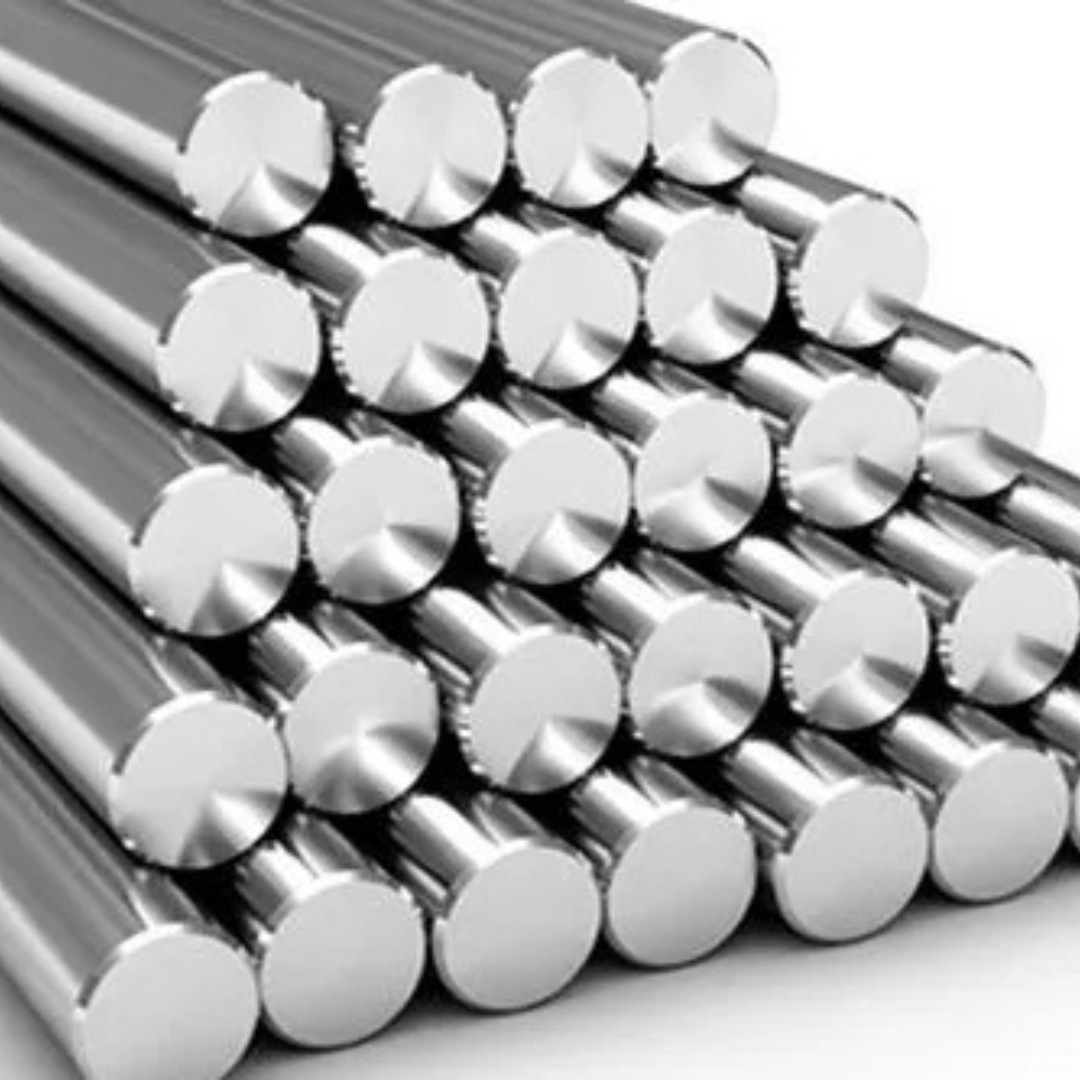
In the world of construction and infrastructure, the profile of steel you choose isn’t just a design decision—it’s the backbone of the entire project. From MS round bars that serve as foundational elements in machinery and frameworks, to RSJ poles that stretch across massive industrial halls, every type of steel profile plays a role that’s both specific and vital.
This guide explores structural steel applications across a wide range of industries, helping you understand where each profile fits best—and how to make the right call based on your project’s technical requirements.
Why Steel Profile Matters in Real Projects
Every structure, whether it’s a warehouse, a bridge, or a multi-story building, requires different steel profiles to serve different purposes. Choosing the correct one involves more than just size and shape. You must consider load types, environmental exposure, fabrication constraints, and national standards.
The term “structural steel applications” refers to how steel grades and profiles perform across tasks like load-bearing, connection, alignment, and fabrication. While RSJ poles provide broad support across spans, MS round bars are essential in tension or rotational parts, and MS square bars excel where right angles and linear strength are required.
RSJ Poles Uses: Powering Major Structural Components
RSJ poles, or Rolled Steel Joists, are widely used across the globe for one primary reason: they allow you to span large distances while keeping the structure light and aligned. Their unique I-shaped cross-section ensures that loads applied from above are efficiently distributed through the flanges and web, making them ideal for:
1. Long Span Structures: Industrial sheds, warehouse roofs, and mezzanine floors benefit from RSJ poles because they allow fewer columns and more open space.
2. Support Beams for Cranes and Machinery: In factories and loading bays, RSJ poles often bear dynamic loads from moving cranes or suspended machinery. They are selected for their high section modulus and reliable performance across wide spans.
3. Structural Frames in Construction: When forming the skeletal framework of a building, RSJ poles serve as the primary load distributors. They support slabs, purlins, and secondary framing elements while maintaining dimensional accuracy during assembly.
4. Bridges and Catwalks: Their ability to resist deformation under load makes them useful for walkways, footbridges, and even vehicular overpasses in smaller-scale civil engineering projects.
MS Round Bar Applications: Where Circular Precision Counts
MS round bars are circular steel sections that serve diverse roles across fabrication, mechanical engineering, and architectural builds. Their uniform cross-section provides a consistent performance under tension, compression, and rotational force.
1. Machine Shafts and Rotating Components: Round bars are commonly used in drive shafts, axles, and spindles where the circular shape ensures balanced rotation and uniform load distribution.
2. Anchor Bolts and Tie Rods: These bars are threaded and used to secure equipment, beams, or structural parts into place. In trusses and tension members, they perform well under direct pulling loads.
3. Pins, Fasteners, and Joints: Due to their geometric symmetry, round bars are machined into connectors, locking pins, and dowels for precise alignment and durable connections.
4. Fabricated Railings and Curved Frames: In architectural frameworks that require bent forms or smooth curves, round bars offer weldability and flexibility, making them ideal for fabricated supports or circular railing systems.
MS Square Bar Construction: Built for Alignment and Connection
MS square bars feature a uniform square cross-section that excels in structures requiring clean, perpendicular connections. They are particularly useful in framing systems, supporting grids, and structural detailing.
1. Gate and Window Frames: The straight, flat edges of square bars ensure reliable alignment when welding or bolting. This is crucial in frames where geometry and fit are essential.
2. Support Brackets and Fixtures: Square bars are often cut and joined into L- or T-shaped supports. Their flat faces simplify joining, reduce fabrication time, and allow flush connections with other surfaces.
3. Secondary Reinforcement: Whether embedded into concrete or used as additional support inside hollow steel structures, square bars add rigidity and improve load-carrying performance in specific zones.
4. Industrial Railings and Grilles: In areas requiring rigid frames and modular welding patterns, square bars are a go-to profile due to their ease of installation and standardized form.
Key Considerations When Matching Profile to Application
Making the right steel choice starts long before the material arrives on site. Understanding technical demands helps you avoid mismatched profiles or over-engineering, which can add unnecessary cost and complexity.
Define the Load Type: Determine if your structure will face compression, bending, tension, or shear forces. RSJ poles are ideal for bending; round bars for axial tension or rotation; square bars for frames and edge-connected parts.
Assess Connection Requirements: If the project involves welding or bolting, square bars provide excellent contact surfaces. Round bars, while effective, may require more precise alignment and clamping during welding.
Evaluate Span and Deflection Limits: For beams or elements under horizontal loads, ensuring deflection stays within safe limits is essential. Long spans with uniform loads usually demand RSJ poles due to their high flexural capacity.+
Factor in Fabrication and Handling: Choose profiles that suit your available equipment and workforce. RSJ poles may need cranes and wide transport, while square and round bars are easier to handle in modular or pre-fabricated construction.
Match Grade to Task: Selecting a grade of structural steel involves checking properties like yield limits, elongation, and chemical composition. For tension members, round bars with moderate grades may be sufficient; for load-bearing beams, higher-grade RSJ sections could be appropriate.
Anticipate Environment and Coatings: While this article doesn’t focus on weather resistance, it’s important to choose profiles that are compatible with coatings and treatments used in your climate or exposure conditions.
Common Mistakes and How to Avoid Them
Many structural errors trace back to a misunderstanding of profile behavior. To ensure safety and efficiency:
Final Thoughts: Choosing with Confidence
Every project, from the simplest railing to a multi-span industrial structure, demands thoughtful selection of structural steel. MS round bars, RSJ poles, and MS square bars each serve distinct purposes—understanding where each fits helps you build smarter, faster, and more effectively.
Start with the load, then consider geometry, connection, and handling. By taking a methodical approach, you ensure that each steel component supports the larger structure—both physically and practically.
When you align a steel profile with a structural application, you are not just building a framework. You are building confidence, efficiency, and a lasting outcome.
Need expert guidance or premium-quality structural steel for your next project?
Connect with YAxis Structural Steels—your trusted partner in MS round bars, RSJ poles, square bars, and more. With a reputation for precision and service, we help you match the right steel grade and profile to your exact project needs.
📍Visit our Office: 607/608, 6th Floor, Clover Hills Plaza, NIBM Road, Kondwa, Pune – 411048
📞 ContactUs : (+91) 8956025602 / (+91) 8956025601
🌐Visit Our Website: www.yaxissteels.com
YAxis Structural Steels Pvt. Ltd., endeavor to give consumer loyalty by executing Quality Management System.
copyright@2024 YAxis Structural Steel. Designed & Developed by Websoft Techno