
Mild steel is one of the most widely used materials in construction and structural engineering. Whether you are working on a building project, road infrastructure, or any other type of construction, knowing how to read mild steel weight charts for MS beams, MS angles, and MS channels is essential. These charts simplify the process of estimating material requirements, helping you calculate total material weight, costs, and even transportation needs. In this blog, we will guide you through how to interpret these charts and use the information effectively.
What Are Mild Steel Weight Charts?
Mild steel weight charts provide the weight of various structural steel profiles, such as beams, channels, and angles, based on their dimensions. These charts are a valuable tool for engineers and construction professionals to determine the weight of materials needed for a specific project. The weight is typically specified in kilograms per meter (kg/m) or pounds per foot (lb/ft), depending on the region or project specifications.
Having a mild steel weight chart on hand allows professionals to plan material usage more effectively, reducing errors and ensuring the correct amount of steel is purchased for a project.
Key Structural Steel Profiles in Weight Charts
Mild steel weight charts typically cover various profiles, each with specific applications. Below are the three most common structural elements you will find in these charts:
MS Beams: ISMB Beams
ISMB beams, also known as Indian Standard Medium Beams, are commonly used for construction purposes. They are I-shaped profiles and are primarily used for carrying heavy loads across spans.
| Profile | Height (mm) | Width (mm) | Weight (kg/m) |
| ISMB 100 | 100 | 50 | 9.5 |
| ISMB 150 | 150 | 75 | 14.3 |
| ISMB 200 | 200 | 100 | 18.5 |
Example:
If you need 50 meters of ISMB 200, and it weighs 22 kg/m, you simply multiply:
This calculation gives you the total weight of the ISMB beams you require for your project.
MS Channels: ISMC Channels
ISMC channels are U-shaped sections used for providing support in various structural applications, such as framing and support for walls or roofs. The weight per meter for ISMC channels is calculated similarly to beams.
| Profile | Height (mm) | Flange Width (mm) | Weight (kg/m) |
| ISMC 100 | 100 | 50 | 8.5 |
| ISMC 150 | 150 | 75 | 12.8 |
| ISMC 200 | 200 | 100 | 16.2 |
Example:
If an ISMC channel is 8 kg/m and you need 100 meters, the total weight would be:
MS Angles: MS Angle Chart
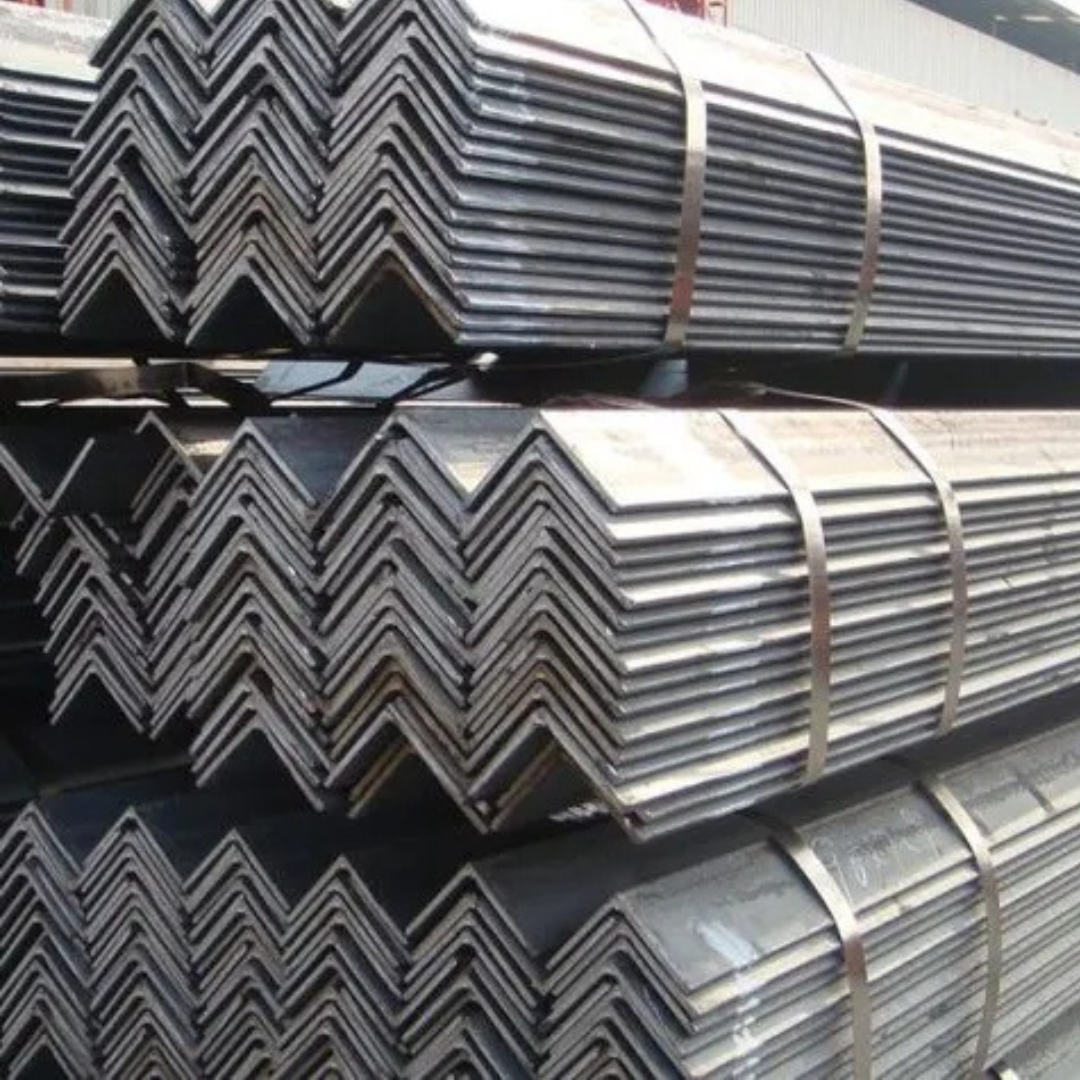
MS angles, which can be either equal or unequal, are typically used in brackets, frames, and general construction work. They are right-angled sections and come in various dimensions.
| Profile | Leg Length (mm) | Thickness (mm) | Weight (kg/m) |
| Equal Angle 25x25x5 | 25 × 25 | 5 | 1.3 |
| Equal Angle 50x50x6 | 50 × 50 | 6 | 3.4 |
| Unequal Angle 75x50x8 | 75 × 50 | 8 | 6.1 |
| Unequal Angle 100x75x10 | 100 × 75 | 10 | 12.6 |
Example:
If an equal MS angle weighs 6 kg/m and you require 150 meters of it:
How to Read Mild Steel Weight Charts
Reading mild steel weight charts may seem complicated at first, but once you break it down, it becomes a straightforward process. Below are the steps you can follow to read and interpret these charts effectively:
Step 1: Identify the Steel Profile
The first thing to do is to locate the specific profile you are working with in the weight chart. For example:
Once you locate the profile, you’ll find a list of different sizes or dimensions.
Step 2: Find the Dimensions of the Section
Each steel profile will have its dimensions listed in the chart. For beams, this will include:
For channels and angles, similar dimensions will be provided, such as height, width, and thickness.
Step 3: Locate the Weight per Meter
Next, find the weight per meter for the specific size you are working with. The chart will list the weight of each size profile in kilograms per meter (kg/m) or pounds per foot (lb/ft). For example, an ISMB 150 might weigh 14.5 kg/m.
Step 4: Calculate Total Weight
To calculate the total weight of the steel required for your project, simply multiply the weight per meter by the total length needed. This gives you the total weight of the steel sections.
Example:
If you need 50 meters of ISMC 200 (which weighs 18 kg/m):
Step 5: Double-Check the Units
Ensure that the units of measurement used in the chart are consistent with your needs. Steel weight is generally provided in kilograms per meter (kg/m), but in some countries, it might be in pounds per foot (lb/ft). Always check the units to avoid errors in weight calculation.
Structural Steel Weight Formula
If you don’t have a mild steel weight chart available or want to double-check the weight, you can use the following structural steel weight formula to calculate the weight of any section of steel.
Weight (kg) = (Width × Height × Thickness × Density) / 1000
Where:
Example:
Let’s calculate the weight of an ISMB 200 beam with the following dimensions:
Using the formula:
Weight (kg) = (200 × 100 × 10 × 7.85) / 1000
Weight (kg) = (15700) / 1000
Weight (kg) = 15.7 kg/m
This gives you the weight per meter of the ISMB 200 beam.
Why It’s Important to Accurately Calculate Steel Weight
Accurately calculating the weight of steel is critical for a variety of reasons in the construction industry:
Conclusion
Understanding how to read mild steel weight charts for ISMB beams, ISMC channels, and MS angles is a vital skill for anyone working in construction or structural engineering. These charts provide essential data that helps in planning, purchasing, and handling materials efficiently. By following the steps outlined above, you can easily calculate the total weight of steel required for your project, improving both accuracy and cost-efficiency. Whether you’re ordering material or planning logistics, knowing how to interpret these charts is essential to ensuring a successful project outcome.
Ready to get started with your steel material needs?
At Yaxis Structural Steels, we are committed to providing high-quality structural steel materials for all your construction needs. If you are looking for reliable and accurate steel solutions, visit our office or contact us today for expert assistance and personalized service.
Visit Our Office:
607/608, 6th Floor, Clover Hills Plaza, NIBM Road, Kondwa, Pune – 411048
Contact Us:
Phone: (+91) 8956025602
Phone: (+91) 8956025601
Website: https://yaxissteels.com/
Let us help you make your project a success with the right materials and expert guidance.
YAxis Structural Steels Pvt. Ltd., endeavor to give consumer loyalty by executing Quality Management System.
© 2026 YAxis Structural Steel. Designed & Developed by Websoft Techno