
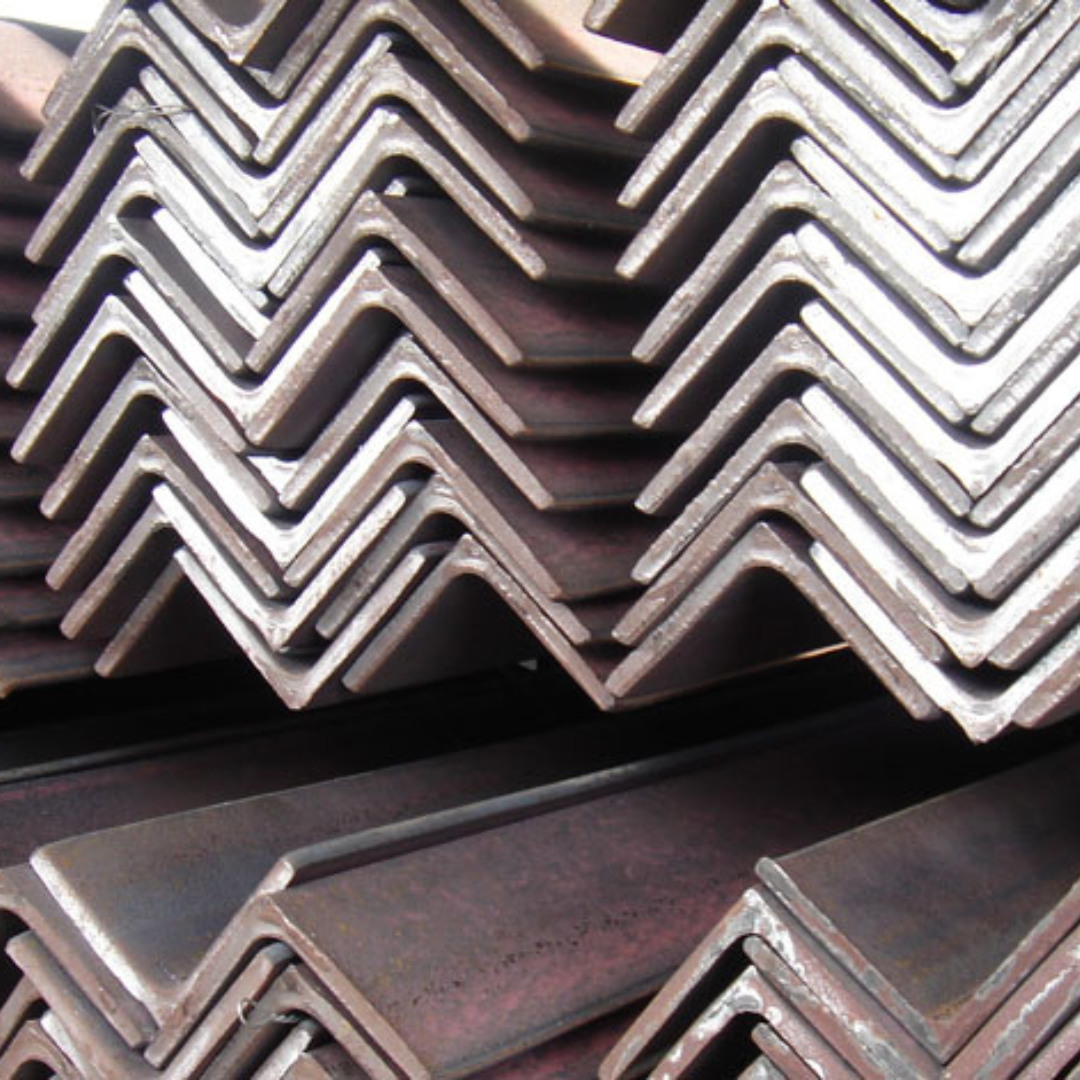
Mild steel angles are like the unsung heroes of the fabrication world—quietly supporting countless projects without taking the spotlight. With their “L” profile design and wide availability in different steel angle sizes, they have a place in everything from warehouse storage systems to custom vehicle modifications.
If you have ever wondered what makes mild steel angles so widely used, or how to pick the right size for your next project, this guide will walk you through the essentials. We will cover the difference between equal and unequal profiles, explore real-world applications beyond the obvious, and give you a step-by-step approach to selecting and calculating using an MS angle weight chart.
Understanding Mild Steel Angles
A mild steel angle is a piece of rolled steel shaped into a 90-degree “L” cross-section. This shape creates two legs—one horizontal and one vertical—that can be of equal length or different lengths, depending on the type.
Why are they so popular?
Instead of being restricted to one field, mild steel angles are used anywhere a strong and reliable framework or edging is needed.
Equal vs. Unequal Mild Steel Angles
Equal Angle
Unequal Angle
Broader Applications of Mild Steel Angles
While construction remains a big market, the real beauty of mild steel angles is their adaptability across industries:
1. Manufacturing and Fabrication
2. Automotive and Transport
3. Agriculture and Farming
4. Storage and Organization
5. DIY and Home Improvement
Steel Angle Sizes – What to Look For
Steel angle sizes are typically described by the leg lengths and thickness. For example, 50×50×5 mm means:
The right size will depend on:
How to Use an MS Angle Weight Chart
The MS angle weight chart is a must-have tool for planners and buyers. It lists common sizes alongside their weight per meter, helping in cost estimation and handling calculations.
Step-by-Step:
Example:
A 75×75×6 mm angle weighs 6.8 kg/m. For 15 meters:
6.8 × 15 = 102 kg total.
This calculation matters because:
Tips for Selecting the Right Mild Steel Angle
When choosing a mild steel angle, keep these factors in mind:
Working with Mild Steel Angles
Even the best material will not perform well without proper handling and preparation:
Wrapping It Up
Mild steel angles are a fabrication staple because they are practical, widely available, and adaptable to almost any industry. Whether you choose an equal angle for balance or an unequal angle for specialized support, the right size—calculated with an MS angle weight chart—can make your project more efficient and cost-effective.
From industrial conveyor systems to DIY garden projects, mild steel angles prove that simple shapes can achieve impressive results when chosen wisely.
Looking for high-quality mild steel angles at competitive prices?
Turn to Yaxis Structural Steels—your trusted source for precision-engineered steel products and expert guidance on selecting the right size for your project.
📍 Visit our Office: 607/608, 6th Floor, Clover Hills Plaza, NIBM Road, Kondwa Pune – 411048
📞 Call us: (+91) 8956025602 | (+91) 8956025601
🌐 Visit our website: https://yaxissteels.com/
Whether it is for industrial fabrication, storage solutions, or custom builds, Yaxis Structural Steels can provide the right materials to help you bring your designs to life.
FAQs
Q1: What is the difference between equal and unequal mild steel angles?
Equal angles have legs of the same length, while unequal angles have different leg lengths for varied load handling.
Q2: What industries use mild steel angles?
They are used in manufacturing, transport, farming, storage systems, and home projects.
Q3: How do I know the size I need?
Consider your load, span, fabrication method, and potential future changes to the structure.
Q4: Why use an MS angle weight chart?
It ensures accurate weight calculations for transport, pricing, and equipment planning.
YAxis Structural Steels Pvt. Ltd., endeavor to give consumer loyalty by executing Quality Management System.
copyright@2024 YAxis Structural Steel. Designed & Developed by Websoft Techno