
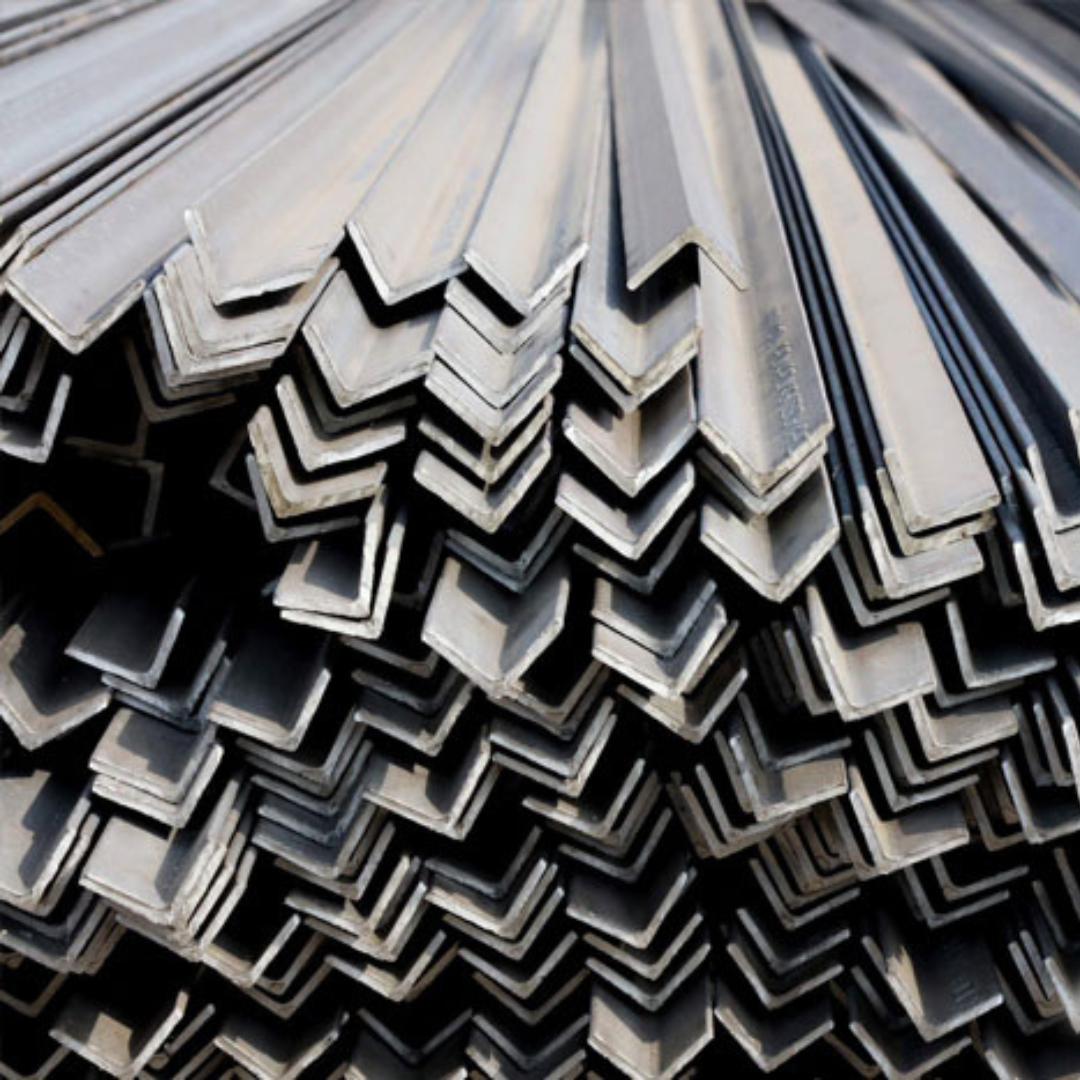
Curious about how MS angles are put to work in the real world? In this blog, we will explore the top 5 uses of MS angles in building and fabrication projects, ranging from support frames to bracing systems.
Top 5 Uses of MS Angles in Building & Fabrication Projects
When it comes to building and fabrication work, few materials are as widely used—or as versatile—as MS angles. These simple L-shaped sections of mild steel have become a staple across countless industries. But what exactly makes them so popular? And where do they fit into large-scale construction and fabrication projects?
In this blog, we will walk you through the top 5 most common uses of MS angles, highlighting how these components are utilized in various structural applications. Whether you are a site engineer, a fabricator, or someone curious about metalwork in construction, this guide offers an in-depth look at where and how MS steel angles are applied.
What Are MS Angles?
MS angles, also referred to as mild steel angles or L angles, are structural sections formed in an L-shape. They are typically made from low-carbon steel and are available in a variety of sizes and grades to suit specific applications.
The unique profile of an MS angle—forming a 90-degree bend—makes it ideal for joining elements, creating frameworks, and reinforcing structures. Its wide availability, ease of cutting and welding, and compatibility with other materials make it a go-to choice in the fabrication and construction world.
1. Support Frames in Buildings and Machinery
One of the most widespread MS angle uses is in the creation of support frames. MS angles are often used as the skeleton behind walls, platforms, shelves, and even parts of machinery.
Why MS angles for framing? The answer lies in their geometry. The L-shaped profile offers a strong and stable base for anchoring other components, ensuring a balanced and well-aligned frame. These are typically used in:
Because they are easy to weld, bolt, or rivet, MS steel angles simplify the assembly process while maintaining alignment across large structures.
2. Bracing Systems and Structural Reinforcement
In any building project, ensuring lateral stability is critical, and that is exactly where bracing systems come into play. MS angles are a common choice for creating diagonal or cross-bracing to prevent swaying and distortion.
Here is how they are used in this context:
By tying different parts of a structure together, MS angles help maintain form and geometry, especially under shifting loads or environmental stress.
3. Warehouse and Industrial Structures
Large industrial settings rely heavily on MS angles in the construction of warehouse structures. These environments require functional, modular, and easily maintainable frameworks, perfectly suited to the characteristics of MS steel angles.
Key applications include:
The ability to customize MS angle sizes and their compatibility with both bolted and welded joints make them adaptable to different warehouse design needs.
4. Fabrication of Ladders, Railings, and Guard Rails
Another practical area where L angles are applied is in the fabrication of safety and access components, like ladders, hand railings, and guard rails. The angled profile offers good contact surfaces for securing horizontal and vertical elements together.
Common uses include:
Because of their simplicity and ease of handling, MS angles are often the first choice for custom metalwork where safety and fast fabrication are priorities.
5. Electrical and Cable Trays
Last but not least, MS angle uses also extend into the world of utilities and infrastructure. Electrical contractors frequently use MS angles to support cable trays and electrical panels. The layout of these trays needs a solid framework to remain in position, especially in vertical or overhead configurations.
Typical applications include:
MS angles offer flexibility in design and installation, especially when working in tight or unconventional spaces.
Why Choose MS Angles for These Applications?
While several materials can be used in structural and fabrication projects, MS angles have carved out a special niche thanks to their functionality and cost-efficiency. They are easy to work with, whether you are cutting, welding, drilling, or assembling.
Moreover, they come in a wide range of grades and thicknesses, giving engineers and designers more freedom to tailor their use to specific load requirements and project scales.
Key Tips for Working with MS Steel Angles
If you are planning to incorporate MS angles into a project, here are a few practical tips to keep in mind:
FAQs
Yes, as long as they are treated or coated properly to minimize exposure-related wear, MS angles can be used in outdoor applications like fencing or sheds.
Absolutely. Most suppliers offer a wide range of sizes and also accommodate custom cuts for project-specific requirements.
An MS angle refers specifically to an angle made from mild steel, while an L angle is a general term describing the shape.
Wrapping It Up
MS angles might appear modest at first glance, but their impact on building and fabrication projects is undeniable. From support frames to warehouse structures, bracing systems, and electrical tray supports, these components deliver exceptional functionality and ease of use across various applications.
If you are involved in construction or fabrication planning, understanding where and how to use MS angles can make your projects more efficient and structurally sound. Always match the MS steel angle size and grade to the specific task, and you are already halfway to a successful outcome.
Looking to source high-quality MS angles for your next project? Get in touch with YAxis Structural Steels—your trusted partner for reliable structural steel products and expert service.
👉 Visit our website: https://yaxissteels.com/
📞 Call us: (+91) 8956025602 / (+91) 8956025601
📍 Visit our office:
607/608, 6th Floor, Clover Hills Plaza,
NIBM Road, Kondwa, Pune – 411048
Let our team at YAxis Structural Steels help you make the right choice for your construction and fabrication needs.
YAxis Structural Steels Pvt. Ltd., endeavor to give consumer loyalty by executing Quality Management System.
copyright@2024 YAxis Structural Steel. Designed & Developed by Websoft Techno